
Understanding what an industrial park is isn’t just academic curiosity: for many companies, it’s the first step before deciding where to locate operations, expand capacity, or invest. In Mexico where demand for industrial and logistics space has increased and speed of execution matters more than ever the difference between choosing a well-planned industrial park and choosing an improvised location can show up in costs, operational continuity, security, logistics, and future growth. That’s why when someone searches “what is an industrial park” or “what is an industrial park used for,” they’re usually trying to solve a bigger question: how to reduce risk and launch faster without limiting the project’s future.
In this guide you’ll find a clear definition, real-world benefits, the differences between commonly confused concepts (industrial zone/polygon, industrial hub, and logistics park), and most importantly practical criteria to choose. By the end, you’ll be able to translate your needs into an objective comparison, which is what actually helps when it’s time to make a decision.
Industrial park: definition and meaning (explained without jargon)
An industrial park is a planned, designated development designed to host industrial and often logistics activities. Its value is not only that “land is available” or that there are warehouses: what sets it apart is the integration of infrastructure and operating conditions built for companies from access roads and internal streets to utilities, security, and in many cases on-site management that standardizes rules and maintenance.
In terms of meaning, “park” implies planning, order, and a functional environment. You feel this in practice: when an industrial park is well designed, it reduces friction that typically appears outside these developments, such as insufficient access for heavy transport, inconsistent utilities, lack of control over the surrounding environment, or security and maintenance issues that become entirely the occupant’s responsibility.
What is an industrial park for? (Real operational benefits)
The best way to understand what an industrial park is for is to think in concrete operational decisions. First, it helps you start faster, because the environment is usually ready or already on track to operate without each company having to build from scratch everything that isn’t its core business. Second, it helps reduce uncertainty, because an industrial park typically offers more stable conditions: access, internal order, coordinated maintenance, and protocols that reduce disruptions.
Third, it helps improve logistics, since location and access are often designed for freight mobility, maneuvering, and connection to major routes. Fourth, it supports structured growth, because a well-managed industrial park makes it easier to plan expansions, internal relocations, or phased development with less impact than if the company were on an isolated site or in an area without governance.
There’s also a benefit many companies only notice later: industrial parks can help with attracting and retaining talent, because an orderly environment with accessibility and a sense of security often improves the daily experience for staff especially in operations that require shifts, transportation, and logistics coordination.
Industrial parks in Mexico: why they’re becoming more important
When discussing industrial parks in Mexico, it helps to look at the broader context. Investment and industrial expansion have increased interest in locations where operations can be established with more certainty and shorter timelines. In that scenario, industrial parks act as “ready-to-plug-in” infrastructure for a company’s strategy: the company focuses on producing, distributing, or delivering services, while the environment addresses many issues that would otherwise cause delays and cost overruns.
This doesn’t mean every industrial park is automatically a good decision. It means that compared to less structured alternatives, the industrial park model is attractive due to the combination of planning, connectivity, utilities, and above all the ability to operate with fewer variables outside your control.
Industrial park vs. an isolated site: total cost matters more than price per square meter
A common comparison is industrial park versus buying land outside a planned development. At first glance, an isolated site may look cheaper per square meter. However, in industrial projects, the number that matters is rarely just “land price”: what’s decisive is the total cost to become operational, including time, risk, additional investment, continuity, and logistics efficiency.
Outside a park, many companies end up spending more on elements that weren’t budgeted as part of the project’s core: upgrades for heavy-vehicle access, private security, lighting, signage, road and perimeter management, coordination with the surrounding area, and uncertainty about how the neighborhood will evolve. In an industrial park, some of that complexity is typically built into the development model, which can be a major advantage when the goal is speed and predictability.
Industrial zone/polygon vs. industrial park
The difference between an industrial zone (often referred to as an industrial “polygon”) and an industrial park creates confusion because the terms are sometimes used interchangeably. An industrial zone/polygon usually refers to an area zoned for industrial use, but it does not necessarily imply centralized management, consistent infrastructure standards, or clear governance of the overall area. It may be a district that grew over time where each property operates under its own conditions.
An industrial park, on the other hand, is typically born as a planned development with infrastructure designed as an integrated system and internal rules that make operations more consistent. You feel the difference in practice when a company needs continuity: if operations depend on on-time deliveries, access control, order, maintenance, and security, the level of structure an industrial park usually offers can reduce risks that appear more often in unmanaged areas.
What is an industrial hub (and how it relates to industrial parks)?
The term industrial hub refers to something broader: it’s not necessarily a single real estate development, but a regional concentration of industrial activity formed by accumulated advantages. An industrial hub can include multiple industrial parks, industrial districts, suppliers, training centers, logistics infrastructure, and service networks that make the region attractive for production.
That’s why an industrial park can exist outside an industrial hub, but when a park is located within a region that already has industrial momentum, companies often gain a double benefit: immediate infrastructure by being in the park and ecosystem advantages by being in the right region. For projects seeking stability and scalability, that combination can be decisive.
What is a logistics park, and when does it make more sense than an industrial park?
A logistics park is primarily designed for distribution, warehousing, and freight movement. Its priority is flow efficiency: access, yards, maneuvering space, proximity to transportation corridors, and features that support operations such as cross-docking, e-commerce, last-mile distribution, or consolidation centers.
The boundary between industrial parks and logistics parks can be blurry in modern developments because many industrial operations now include major logistics components. The decision, then, is not about choosing a label, but identifying the business bottleneck. If transportation and time-to-market are critical, logistics factors matter more. If production is the core, then stable utilities, the operating environment, and site planning tend to be the priority.
How to choose an industrial park in Mexico (criteria that actually change the decision)
Choosing an industrial park well isn’t about “which looks best in photos,” but about checking variables that affect the project from day one. The first is real connectivity, measured in operational travel times rather than just distance. The second is utility capacity and reliability, because it’s not enough that water, power, or telecom “exist” what matters is whether they’re properly sized and stable.
The third is security and control of the environment, including access and protocols. The fourth is quality of internal planning, such as internal roads, maneuvering areas, lighting, and overall order, because these influence productivity and reduce incidents. The fifth is legal and operational certainty, since a project needs clear conditions for acquisition, leasing, or development, plus internal rules that are understandable and consistent.
Finally, one criterion that often tips the balance is scalability. A location may work today but become a constraint if the company grows or changes its operation. That’s why, when comparing, it’s helpful to think in phases: setup, stable operations, and expansion.
Why Yucatán appears on industrial investment shortlists (a natural bridge to decision-making)
Many companies comparing regions within Mexico end up evaluating Yucatán due to a combination of factors: potential for regional connectivity, infrastructure growth, attractiveness for projects seeking to diversify locations, and an environment that depending on the operating model may offer advantages in costs and planning. For many businesses, the analysis starts with a macro search (“industrial parks in Mexico”) and then shifts to a regional search. That step is normal: first you understand the concept, then you validate the region, and finally you compare a specific park.
If your project is evaluating southeastern Mexico and you want to apply the criteria from this guide to a real option, you can review a top-tier industrial park in Yucatán with details on location, connectivity, and development features here: https://cbpmx.com/en/premier-industrial-park-in-yucatan-cbpark/
Next step: turn research into a real comparison (without losing weeks)
Once you understand the difference between an industrial park, an industrial zone/polygon, an industrial hub, and a logistics park, the next useful step is to translate it into your case: how many square meters you need, whether you require land or a warehouse, which logistics routes are critical, your target start date, and how you expect to grow. With that information, conversations change from “browsing options” to “feasibility validation,” which is where decisions are actually made.
If you’re comparing options in Yucatán and want to see how a development aligns with your criteria for location, continuity, and scalability, you can review details and request information directly here:
https://cbpmx.com/en/premier-industrial-park-in-yucatan-cbpark/
FAQ
What is an industrial park?
An industrial park is a planned development for industrial and/or logistics activities that clusters companies within a defined area with infrastructure, utilities, and often on-site management to support operations and growth.
What is an industrial park used for?
It’s used to operate with greater certainty and efficiency: it improves access and logistics, speeds up setup, reduces security risks, and often provides infrastructure and services that allow operations to start sooner.
What’s the difference between an industrial park and an industrial zone/polygon?
An industrial zone/polygon is typically an area zoned for industrial use without the same level of centralized management or standardized infrastructure; an industrial park usually integrates planning, shared infrastructure, and more consistent operating rules.
What services does an industrial park typically include?
It varies by development, but typically includes internal roads and lighting, access to water and sanitary systems, power, telecommunications, and security measures such as controlled access and surveillance.
What should I review before choosing an industrial park in Mexico?
Location and connectivity, real utility capacity, security and access control, quality of internal roads and maneuvering areas, legal certainty, growth potential, and timeline to start operating.
What is a logistics park and when does it make sense?
It’s a development focused on distribution and warehousing. It makes sense when your priority is freight flow, transportation routes, yards, and maneuvering—more than manufacturing processes.
Why consider Yucatán for an industrial project?
Because it can offer opportunities for regional connectivity, infrastructure growth, and an attractive environment for companies diversifying locations within Mexico.
Where can I review a top-tier industrial park in Yucatán to compare options?
You can review CBPark’s details here: https://cbpmx.com/en/premier-industrial-park-in-yucatan-cbpark/

What Is an Industrial Park? Definition, What It’s For, and How to Choose One in Mexico
Understanding what an industrial park is isn’t just academic curiosity: for many companies, it’s the first step before deciding where to locate operations, expand capacity, or
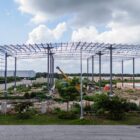
TCO in Mexico: Why Building in Yucatán is a Strategic Financial Move
When a company decides to launch manufacturing in Mexico, evaluating only the cost per square foot of rent or purchase is the most common mistake. The true metric that separates a

Investing in Yucatán: why an eco-industrial park is the future of nearshoring in Mexico
Nearshoring in Mexico is no longer just a matter of geographic proximity to North American markets or competitive labor costs. Today, global competitiveness is played out on operat
What Is an Industrial Park? Definition, What It’s For, and How to Choose One in Mexico
Understanding what an industrial park is isn’t just academic curiosity: for many companies, it’s the first step before deciding where to locate operations, expand capacity, or
TCO in Mexico: Why Building in Yucatán is a Strategic Financial Move
When a company decides to launch manufacturing in Mexico, evaluating only the cost per square foot of rent or purchase is the most common mistake. The true metric that separates a
What Is an Industrial Park? Definition, What It’s For, and How to Choose One in Mexico
Understanding what an industrial park is isn’t just academic curiosity: for many companies, it’s the first step before deciding where to locate operations, expand capacity, or
TCO in Mexico: Why Building in Yucatán is a Strategic Financial Move
When a company decides to launch manufacturing in Mexico, evaluating only the cost per square foot of rent or purchase is the most common mistake. The true metric that separates a
