
Opening a plant in Mexico is a comprehensive industrial project, not a simple real estate decision. Those searching for “how to open a plant in Mexico” usually have two goals: understanding the actual steps to become operational and reducing the risk of delays related to permits, supply chain, labor, and infrastructure. The results depend primarily on how you set up the project: defining requirements, choosing the region, selecting the real estate model, and parallel activity planning. This guide offers a practical and replicable path, useful both for those evaluating an initial entry and for those looking to expand production or logistics capacity. In Central Business Park (CBP / CBPark), we support international businesses in the process of settlement and project implementation. You can start here for an initial assessment: https://cbpmx.com/en/.
Why open a plant in Mexico (and when it is truly worthwhile)
The main reasons for opening a plant in Mexico concern competitiveness and speed: access to North American markets, optimization of delivery times, the possibility of reducing total costs, and diversifying supply chain risk. In many cases, the choice of Mexico is also driven by the need to increase operational resilience, avoiding excessive dependence on a single production geography. It is truly worthwhile when the company has the volumes or a growth plan that justifies the investment. If, instead, the need is temporary or uncertain, it might be more efficient to start with a lighter model, such as leasing industrial space or a phased project.
Step 1: define the plant model (requirements before the map)
Before searching for “where” to open, you must define “what” to open. In this phase, it is advisable to produce an essential but complete operational brief: type of process, automation levels, layout, electrical and water requirements, volumes, surfaces, number of shifts, and headcount. These requirements determine whether a standard structure, a specialized building, or a custom project is needed. Skipping this step almost always leads to rework and startup delays.
Step 2: choose the region in Mexico with measurable criteria
The choice of region should not be based on perceptions alone. The criteria that truly drive the decision are: connection to logistics corridors, access to ports/airports, infrastructure quality, labor availability, safety, and ecosystem of suppliers. The point is not to find “the best region in absolute terms,” but the region most consistent with the operational model defined in Step 1.
Step 3: decide between industrial park, industrial land for sale, or build-to-suit
The real estate choice is often the factor that determines how quickly you reach operational status. Generally, there are three paths. The first is to settle in an industrial park, where infrastructure and services are already planned and managed. The second is to look for industrial land for sale outside of a park; this allows for total independence but requires the company to directly manage all permits, utilities, and security connections. The third is build-to-suit, which is ideal when custom requirements are needed without the burden of managing the construction process directly. At CBP (Central Business Park), we assist foreign companies in evaluating these options to find the fastest path to operation.
Step 4: set up legal structure, taxation, and contracts
In parallel with the location, the legal and contractual structure must be defined. Lease, purchase, and service contracts must be aligned with real operational requirements, including property delivery (commissioning), maintenance, insurance, and taxes. At CBP, we support foreign companies in the practical evaluation phase to reduce decision times and align technical requirements from the beginning.
Step 5: permits, compliance, and safety (manage them as a project)
Permits and compliance must run in parallel with construction. A logistics center has different requirements than a chemical plant. Correct management provides for a compliance roadmap with clear responsibilities and deadlines. In addition to regulation, it is essential to design operational safety (fire prevention, access management, business continuity). A well-organized industrial park provides standardization and clear rules.
Step 6: recruiting, training, and local supply chain
The plant is not operational until the people and the supplier network are. Recruiting must be planned in advance, especially for technical roles. In parallel, the local supply chain must be qualified (packaging, maintenance, transport, utilities) to reduce dependencies and ensure alternatives during peak periods.
Step 7: realistic timeline and parallelization (the fastest way to start)
The most efficient projects manage activities in parallel: real estate, permits, machinery, HR, and logistics. This reduces the risk of discovering too late that a bottleneck was not in the building, but in permits or hiring. A concrete way to accelerate is to apply requirements to real options in an industrial park to quickly understand feasibility.
Common mistakes when opening a plant in Mexico (and how to avoid them)
The first mistake is choosing the location only by cost. The second is not defining technical requirements before choosing the building. The third is underestimating local governance and infrastructure (security and maintenance). The fourth is dealing with permits late in the project. The fifth is lacking a project management structure with clear responsibilities between local and corporate teams.
Final checklist: what to prepare before deciding
Before making final decisions, prepare a checklist that includes technical requirements, surfaces, logistics volumes, timeline, budget, and compliance constraints. Then, compare 2–3 real options using the same criteria. Choosing a solution that reduces variables and accelerates the startup is often worth more than an unmeasured initial saving. To move quickly to a concrete evaluation, request an initial assessment of your case here: https://cbpmx.com/en/
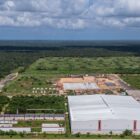
How to open a plant in Mexico: operational guide
Opening a plant in Mexico is a comprehensive industrial project, not a simple real estate decision. Those searching for “how to open a plant in Mexico” usually have two goals:
What Is an Industrial Park?
Understanding what an industrial park is isn’t just academic curiosity: for many companies, it’s the first step before deciding where to locate operations, expand capacity, or
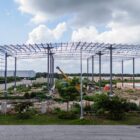
TCO in Mexico: Why Building in Yucatán is a Strategic Financial Move
When a company decides to launch manufacturing in Mexico, evaluating only the cost per square foot of rent or purchase is the most common mistake. The true metric that separates a
How to open a plant in Mexico: operational guide
Opening a plant in Mexico is a comprehensive industrial project, not a simple real estate decision. Those searching for “how to open a plant in Mexico” usually have two goals:
What Is an Industrial Park?
Understanding what an industrial park is isn’t just academic curiosity: for many companies, it’s the first step before deciding where to locate operations, expand capacity, or
How to open a plant in Mexico: operational guide
Opening a plant in Mexico is a comprehensive industrial project, not a simple real estate decision. Those searching for “how to open a plant in Mexico” usually have two goals:
What Is an Industrial Park?
Understanding what an industrial park is isn’t just academic curiosity: for many companies, it’s the first step before deciding where to locate operations, expand capacity, or
